Reverse Engineering - From Discontinued to Re-imagined
One of the most exacting challenges in classic vehicle preservation is one that no amount of money or patience can simply solve: the part you need no longer exists. Whether a component is discontinued, no longer available (NLA) from the original manufacturer, or simply lost to the passage of time, the choice facing an owner is stark — accept a compromise, or commission work from someone capable of making it again properly. At HR Fabrication, re-engineering obsolete and discontinued components for classic and historic vehicles is a discipline we approach with the same rigour we apply to any bespoke motorsport build — combining meticulous research, precise measurement, modern manufacturing technology, and an uncompromising standard of fit and finish.
One of the most exacting challenges in classic vehicle preservation is one that no amount of money or patience can simply solve: the part you need no longer exists. Whether a component is discontinued, no longer available (NLA) from the original manufacturer, or simply lost to the passage of time, the choice facing an owner is stark — accept a compromise, or commission work from someone capable of making it again properly. At HR Fabrication, re-engineering obsolete and discontinued components for classic and historic vehicles is a discipline we approach with the same rigour we apply to any bespoke motorsport build — combining meticulous research, precise measurement, modern manufacturing technology, and an uncompromising standard of fit and finish.
The process begins not at the bench, but with understanding. Every component we reproduce starts with a thorough study of the original — its geometry, its material specification, its function within the wider system, and critically, why it was made the way it was. Where original parts or accurate reference examples are available, we use professional 3D scanning to capture geometry to sub-millimetre accuracy, building a precise digital model that records every surface, every mounting face, and every interface with surrounding components. Where no surviving original exists, we work from factory drawings, period photographs, owner measurements, and technical consultation to reconstruct the design from first principles. The resulting 3D model becomes the foundation for everything that follows — a permanent, dimensionally verified digital record that can be revisited, refined, and archived for future reference.
From that model, we produce components using a combination of CNC machining, laser cutting, and traditional hand fabrication — selecting the appropriate process for each feature based on the tolerances and surface finish required. Material selection is a considered decision on every job: where the original specification remains appropriate, we match it; where fifty years of materials science has produced something demonstrably superior — a higher-grade aluminium alloy, an improved sealing compound, a more corrosion-resistant stainless specification — we make that case to the owner and proceed with their informed agreement. The goal is never to change the character of a component, but to ensure it functions reliably and lasts. A reproduced part that fails in service is not a reproduction — it is a disappointment.
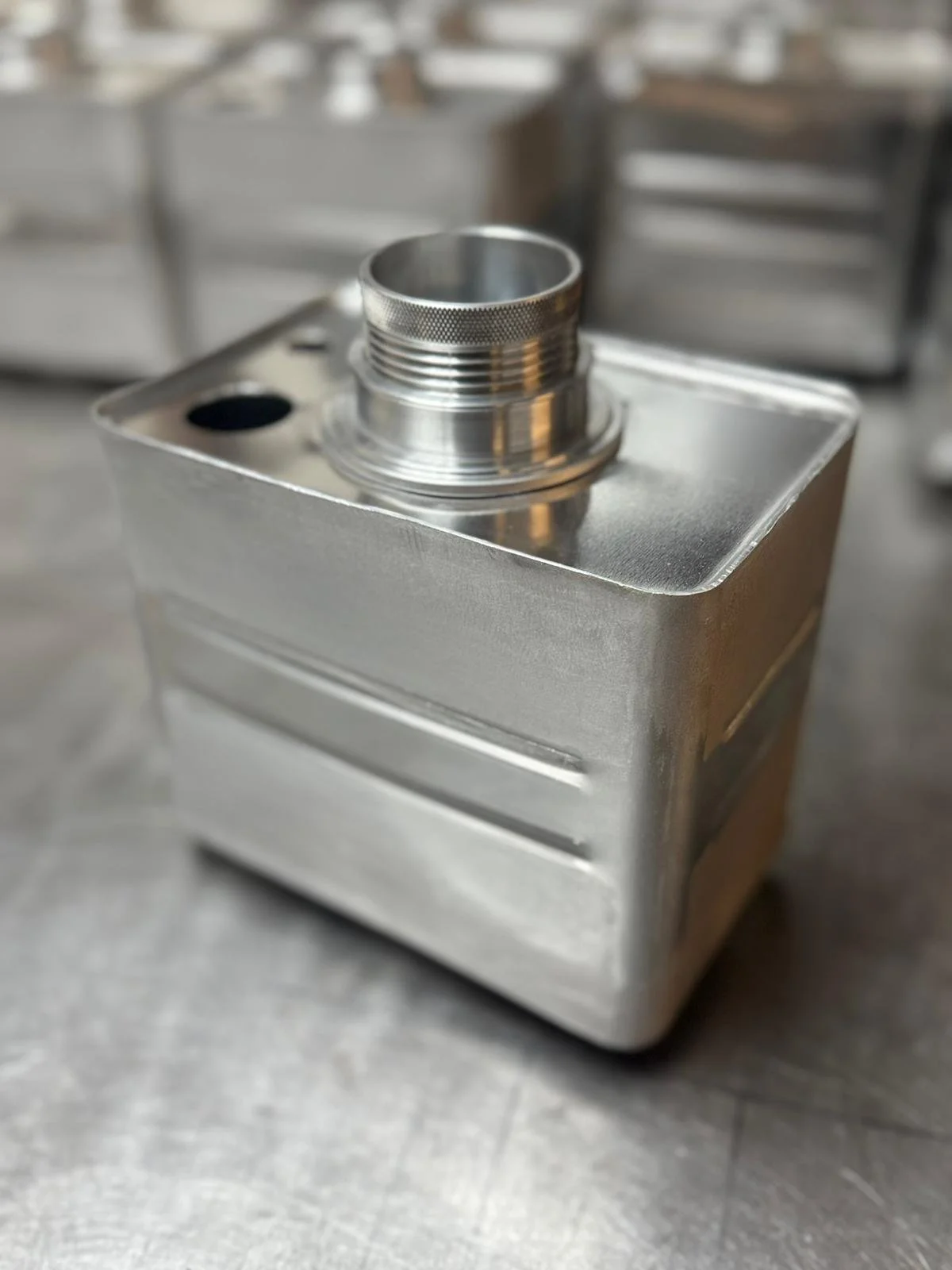
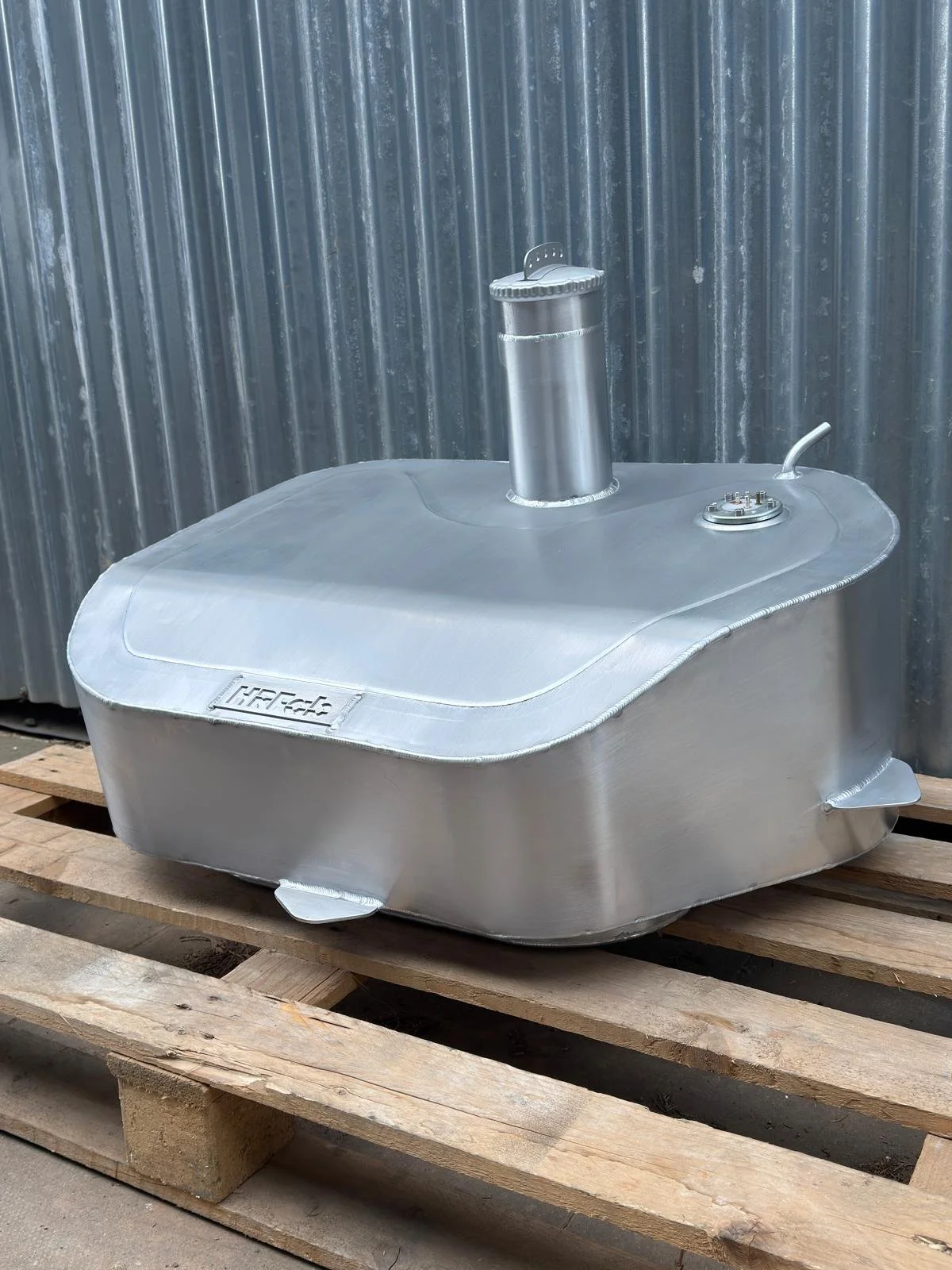
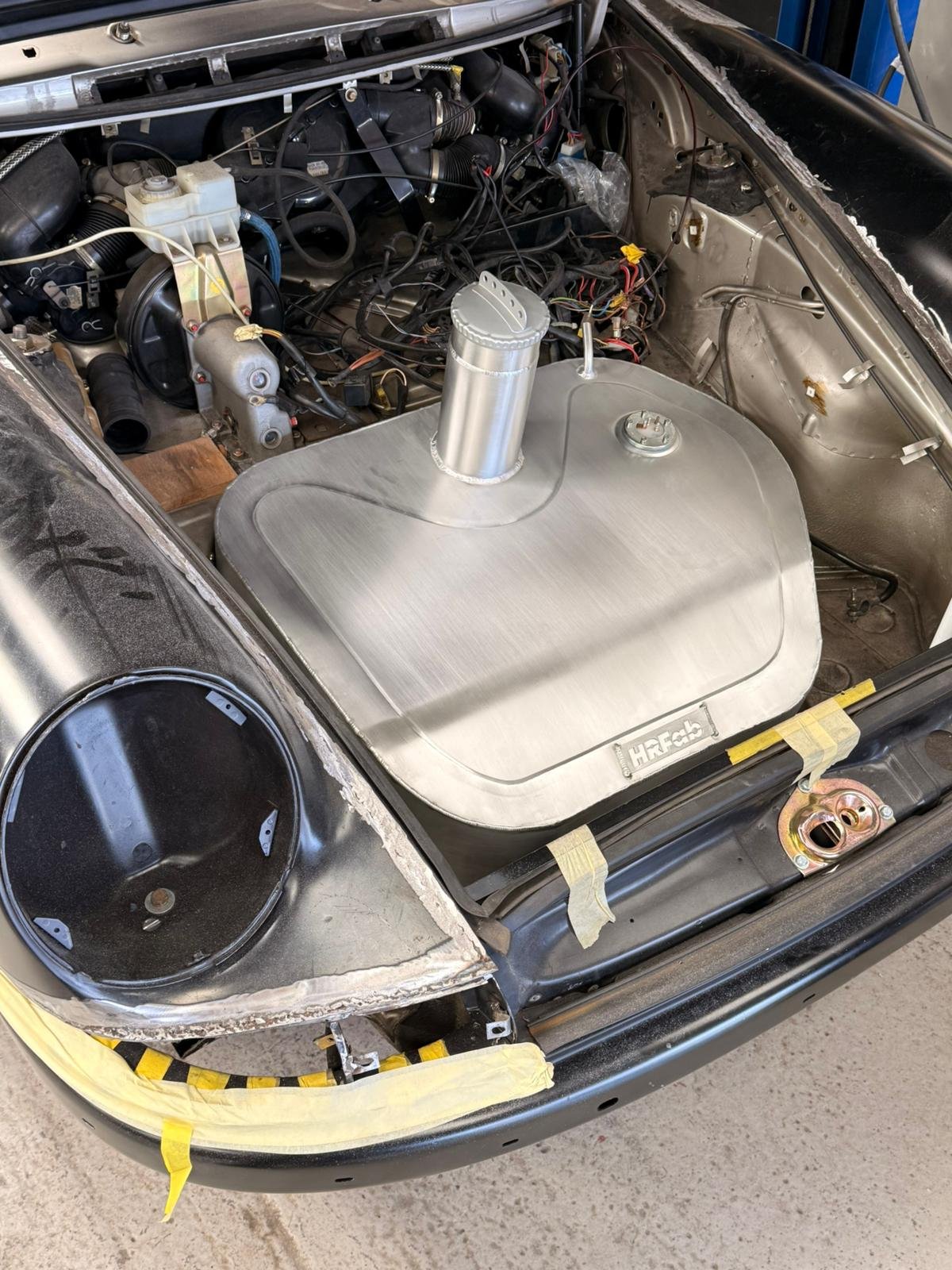
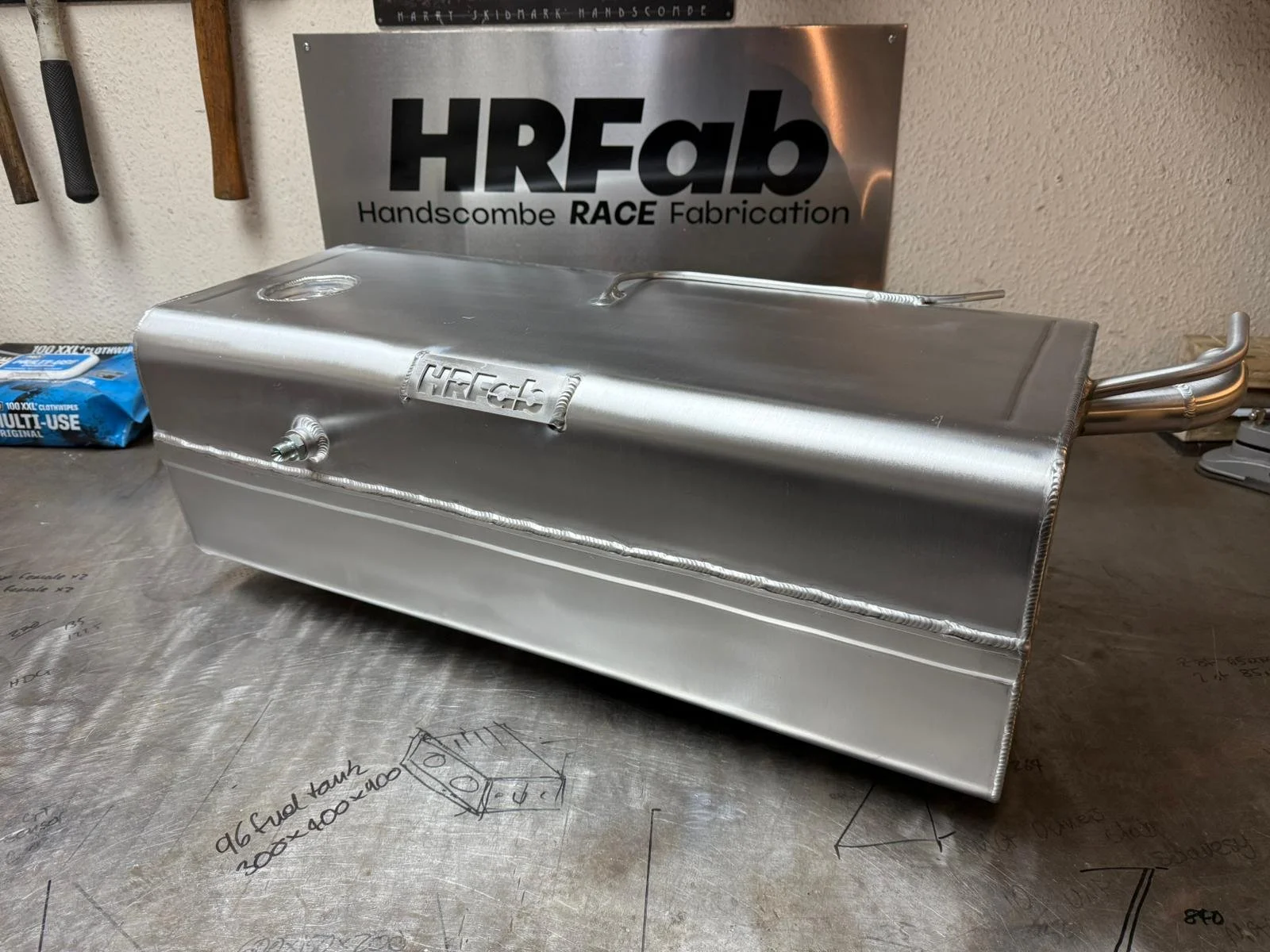
The three vehicles shown here illustrate the breadth of what this work demands. The 1976 Porsche 911 RSR fuel tank, with its distinctive centre-fill configuration developed for rapid pit-stop refuelling in endurance racing, required the recreation of a component whose original specification is long NLA from Porsche — a safety-critical aluminium tank where dimensional accuracy, weld integrity, and the precise geometry of the centre filler neck, mounts, and venting arrangement are all non-negotiable. The 1969 Saab 96 fuel tank presented a different set of challenges: a simple, pressed-steel component with a simple flaw, corrosion. The replacement had to fit within the precise packaging envelope of the original body without modification — period-correct in form, but fabricated from long lasting aluminium, to ensure a lifetime replacement and extended service life. The 1972 Maserati Merak LHM reservoir brought a third dimension of complexity entirely: a hydraulic fluid tank that sits at the heart of the Merak's Citroën-derived high-pressure hydraulic system — a sophisticated circuit that operates the brakes, clutch servo, and pop-up headlights simultaneously. The reservoir's geometry, connection points, and internal baffling are all interdependent with the broader system; reproducing it incorrectly would introduce failure modes into a circuit where reliability is essential.
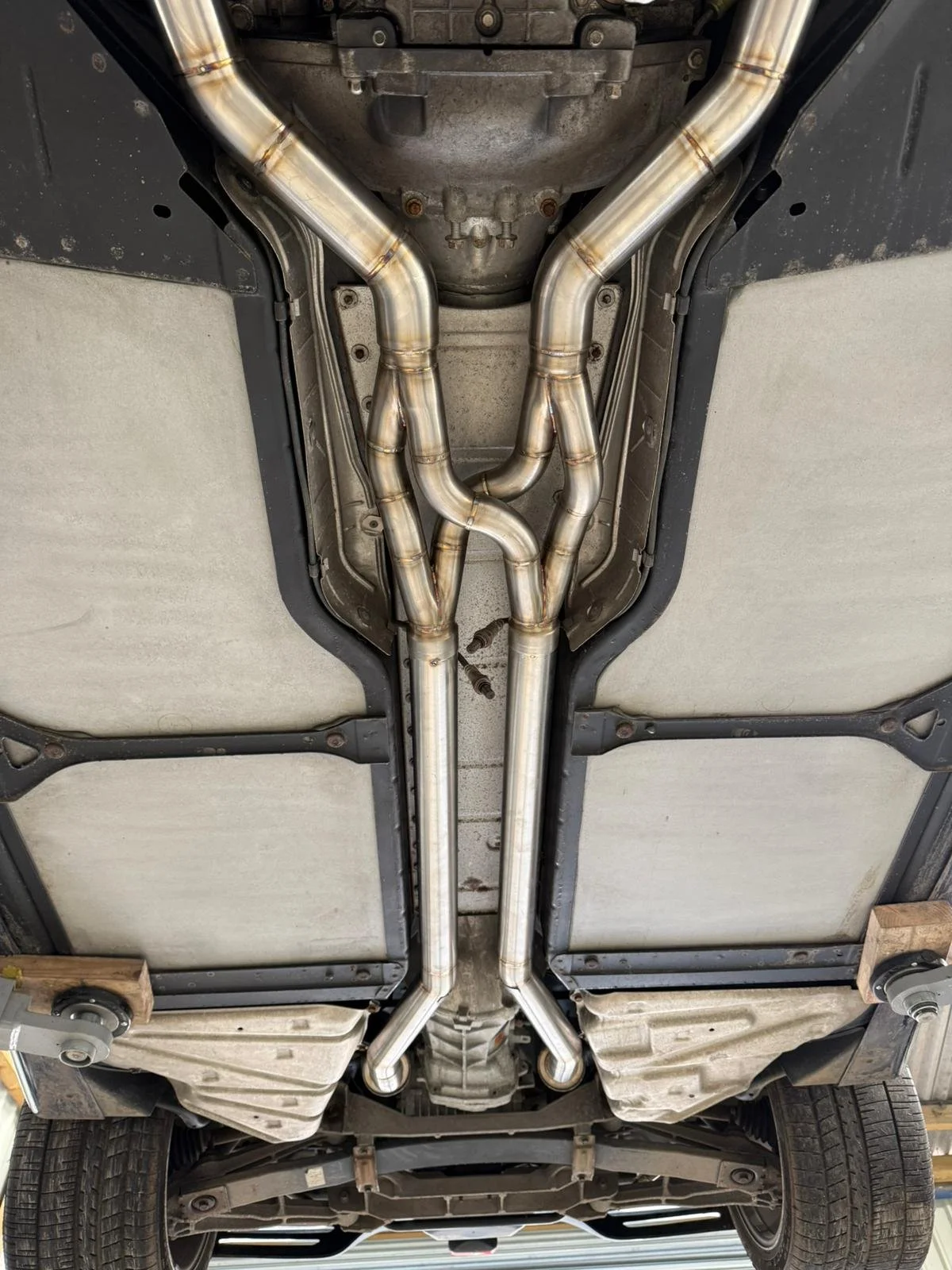
Across all three, what the photographs show — and what every customer who collects a finished component notices — is the attention paid to fit and finish. Edges are dressed. Seams are consistent. Surfaces are finished to the standard the original manufacturer intended, in some cases exceeding it. Every bracket hole is in the right place. Every fitting thread is clean. These are not approximate copies; they are engineered replacements, made by hand, to last.
If you own a classic or historic vehicle and face the challenge of a discontinued, NLA, or irreproducible component, we welcome the conversation. The more complex the problem, the more likely we are the right people to solve it.
take The First Step