
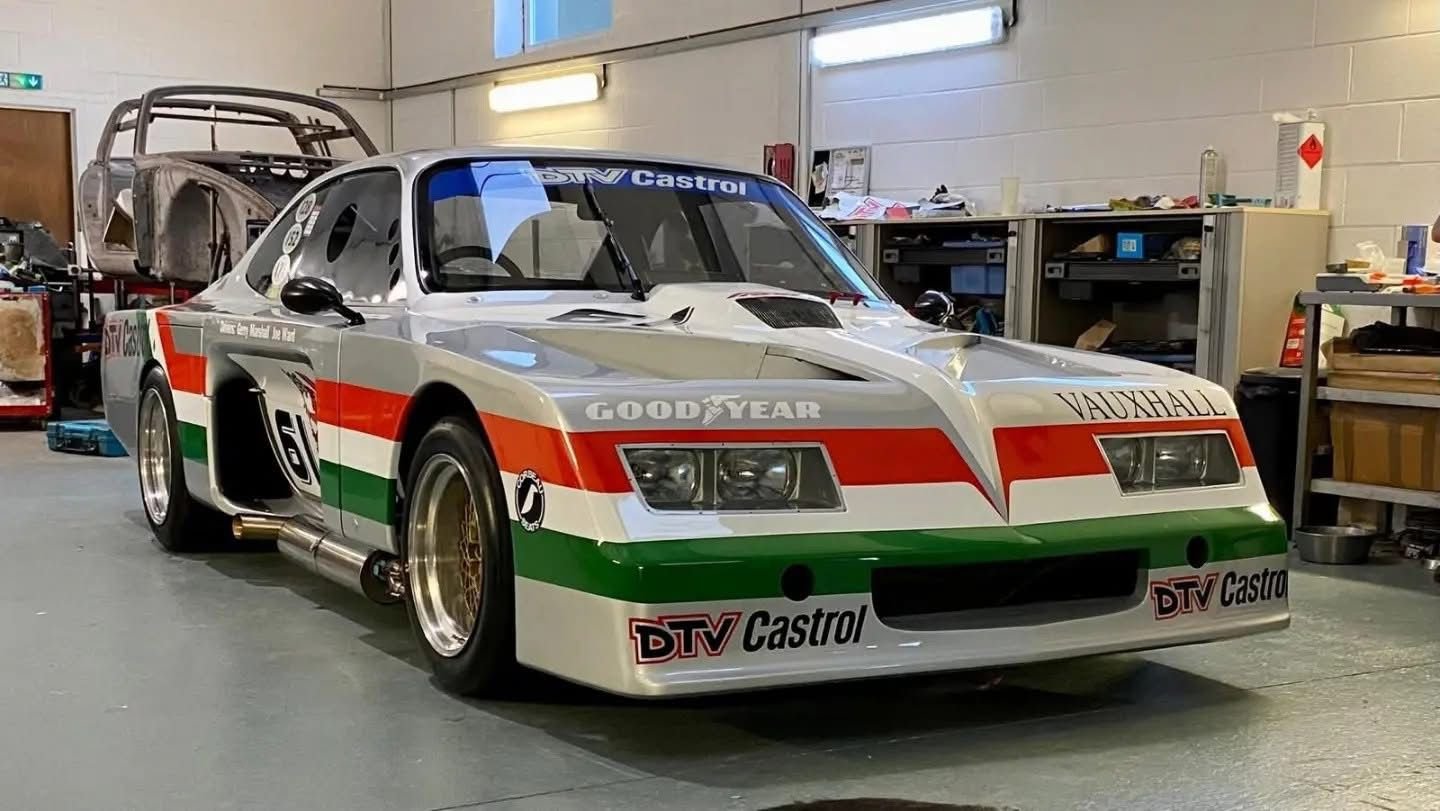
Baby bertha - repair, restoration and re-engineering
Few cars carry the weight of British motorsport history quite like Baby Bertha — the 1975 Dealer Team Vauxhall Firenza Super Saloon built around a five-litre Repco-Holden V8, and the car with which Gerry Marshall claimed fifteen wins and the Tricentrol Super Saloon Championship in its debut season. When Baby Bertha suffered a racing incident in 2022, the damage extended beyond the cosmetic: the full exhaust system, fuel cell, radiator, and cooling system all required attention,not simply repair, but a considered programme of restoration and re-engineering that respected everything the car represents while equipping it to race reliably for years to come.
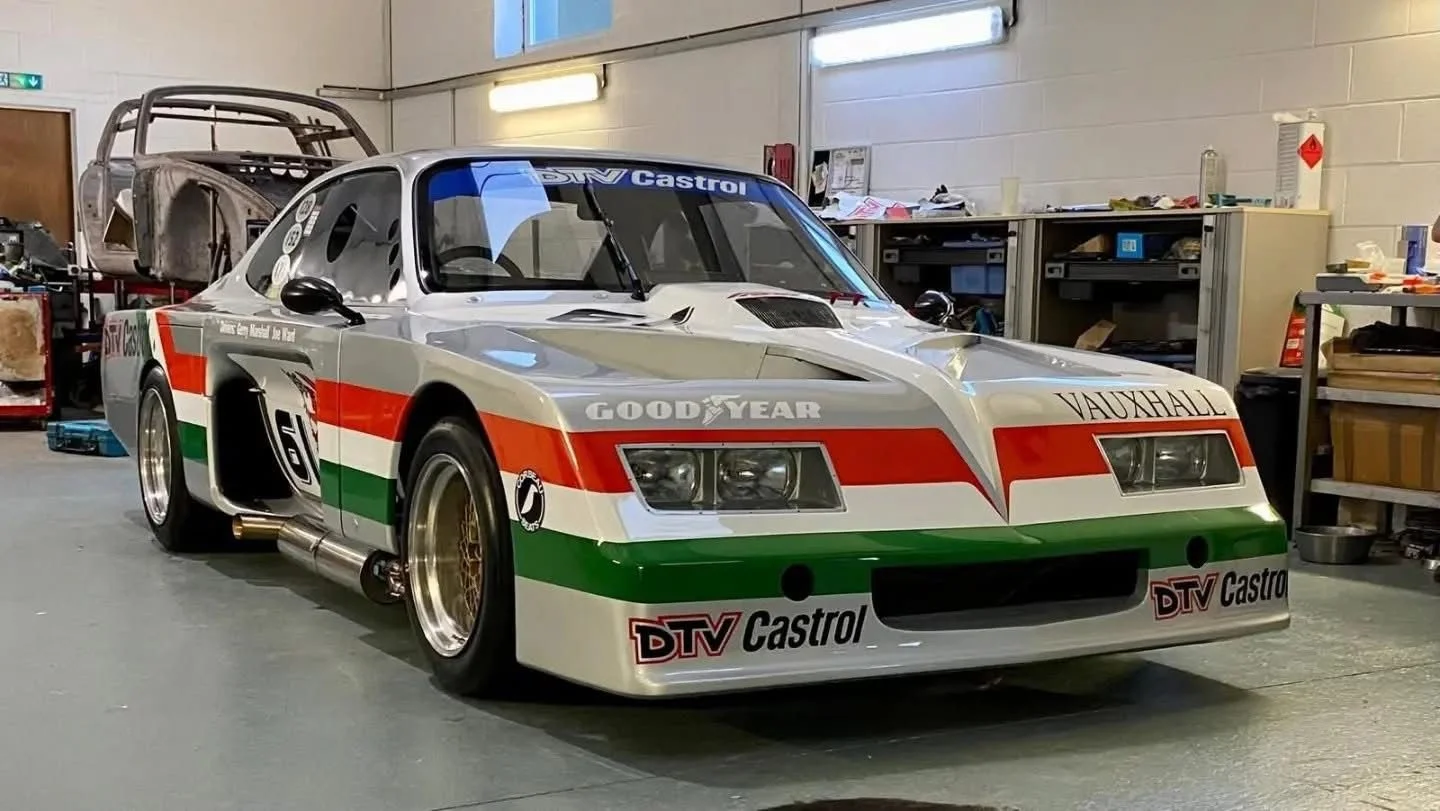
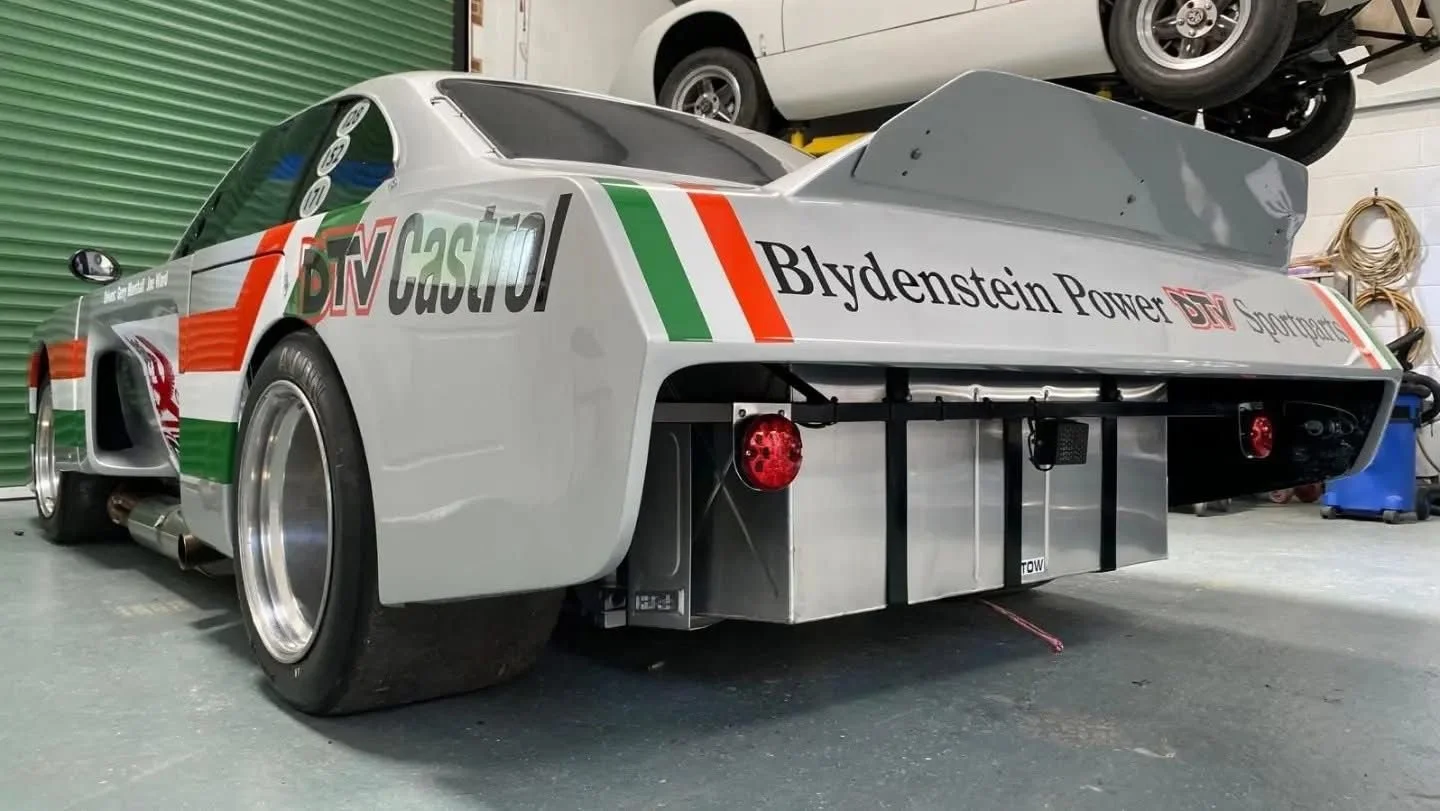
Few cars carry the weight of British motorsport history quite like Baby Bertha — the 1975 Dealer Team Vauxhall Firenza Super Saloon built around a five-litre Repco-Holden V8, and the car with which Gerry Marshall claimed fifteen wins and the Tricentrol Super Saloon Championship in its debut season. When Baby Bertha suffered a racing incident in 2022, the damage extended beyond the cosmetic: the full exhaust system, fuel cell, radiator, and cooling system all required attention, not simply repair, but a considered programme of restoration and re-engineering that respected everything the car represents while equipping it to race reliably for years to come.
The challenge HR Fabrication faced was one that defines the very best historic motorsport restoration work: how do you honour the integrity and provenance of an iconic, irreplaceable competition car whilst applying fifty years of advanced engineering knowledge to make it safer, more durable, and raceable at the level it deserves? Every decision made at the bench had to balance fidelity to the original DTV specification against the pragmatic reality that Baby Bertha is not a museum piece — she is a working racing car, and the crowds who come to see her expect the full-throttle spectacle that made Gerry Marshall a legend.
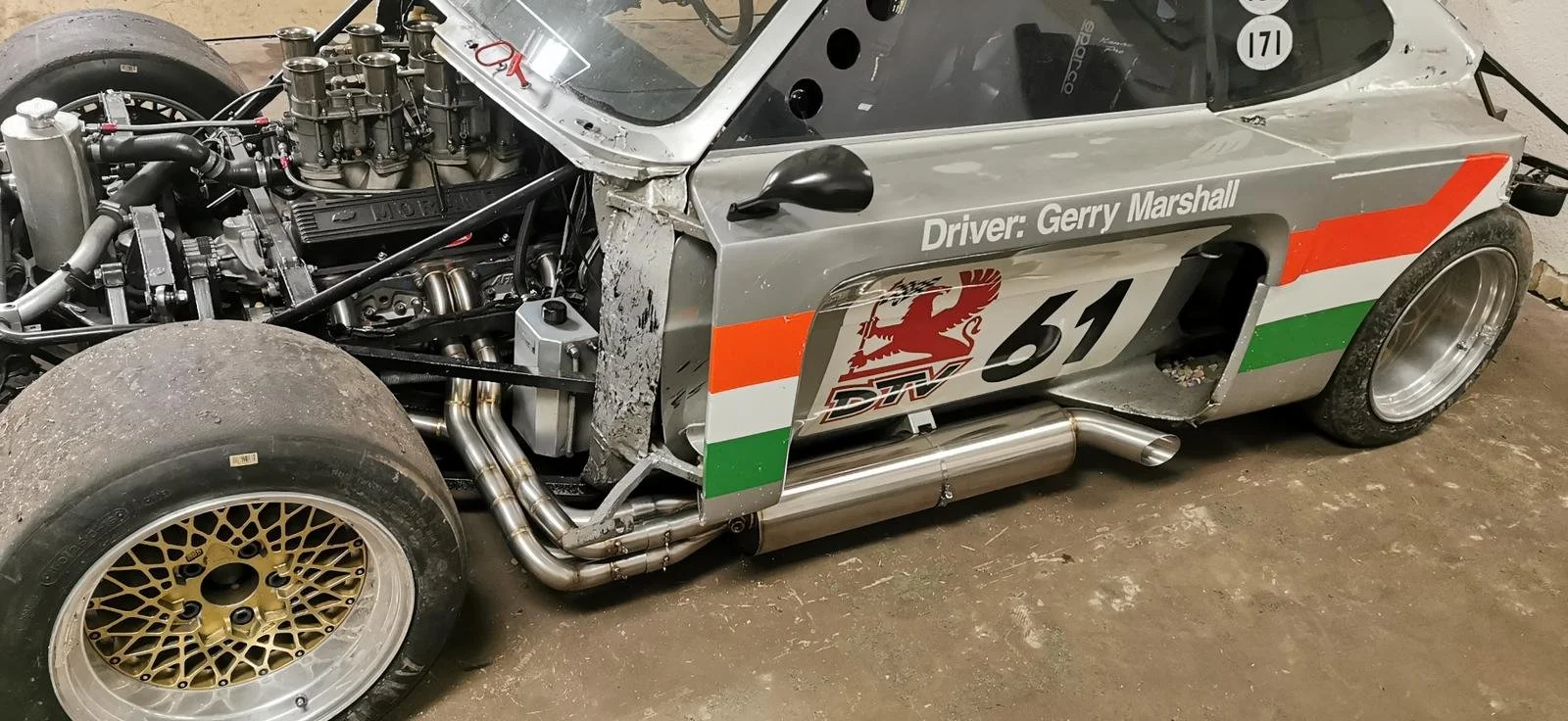
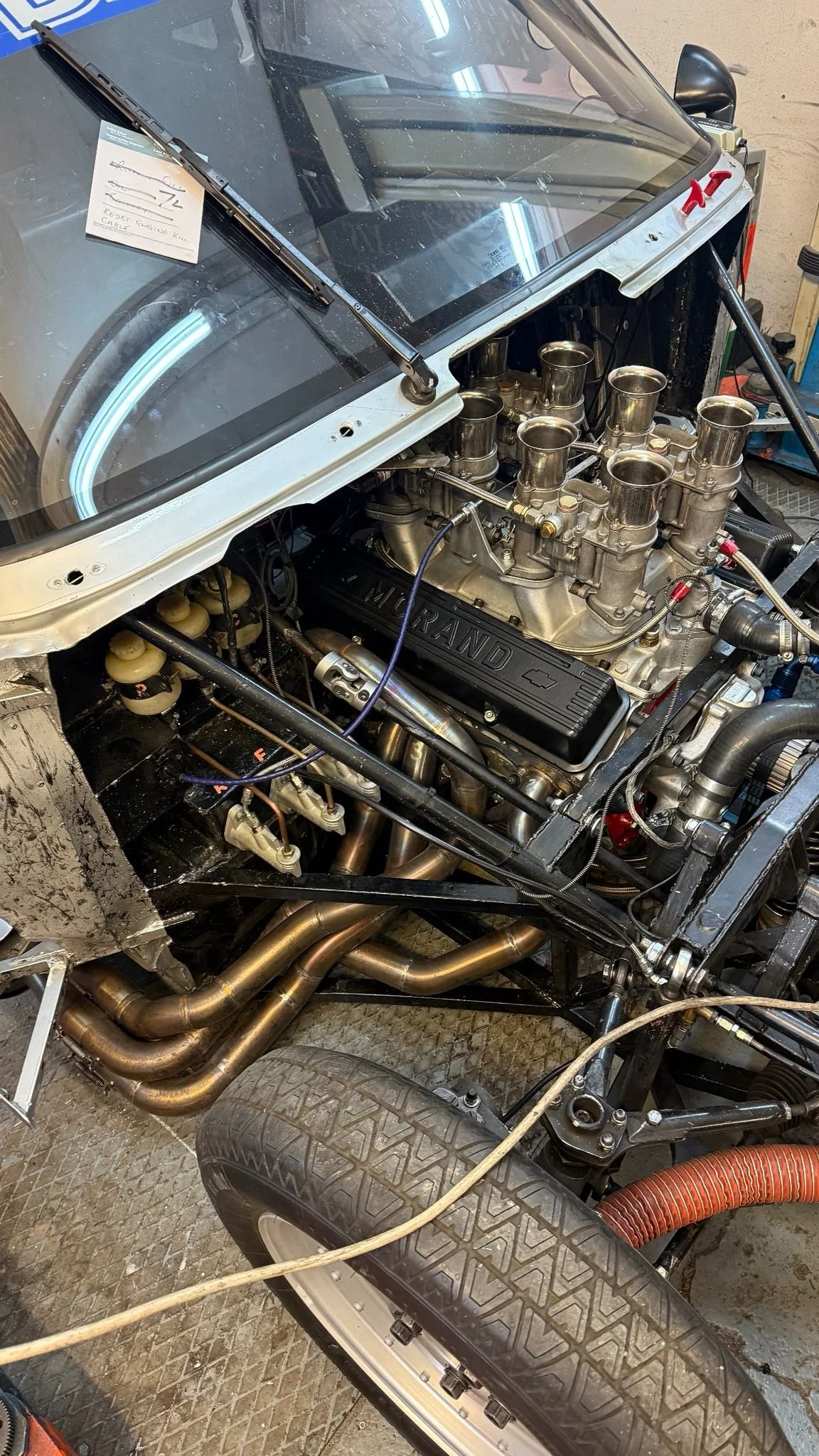
The exhaust system was completely redesigned and remanufactured. Working from the original architecture — a high-performance custom system sized around the demands of the bespoke built Chevrolet Small Block that sits in place of the original Repco V8 — HR Fabrication produced new components using precision TIG welding in 16 gauge 316L Stainless Steel to handle the thermal and mechanical loads the engine generates in competition. Routing, fitment tolerances, and collector geometry were all re-examined, with modern fabrication techniques applied to produce a system that out-performs the original specification on the track, offering greater longevity, increased sound deadening for current regulations, whilst also keeping some design and style cues from the original car.
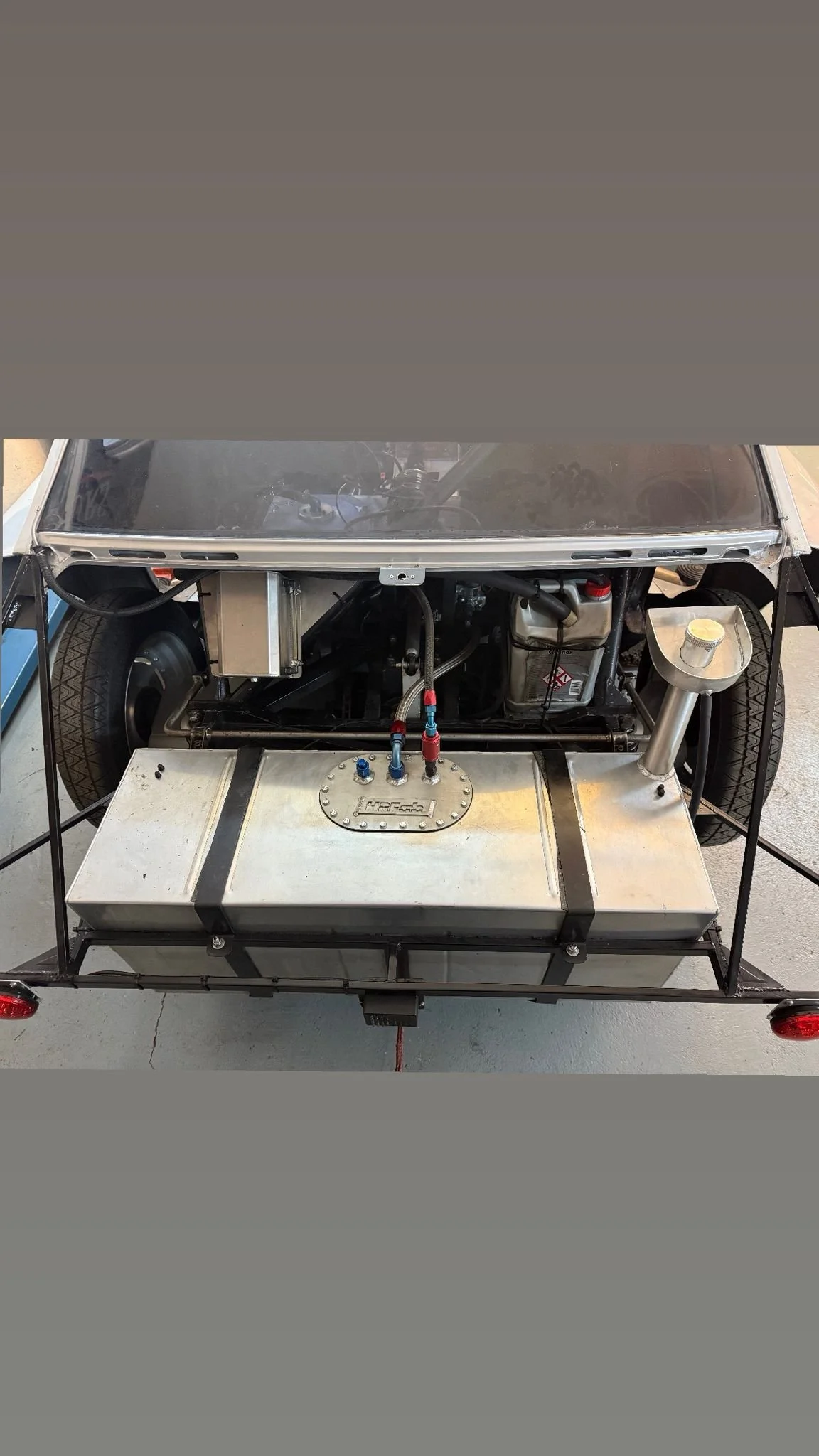
The fuel cell replacement followed the same philosophy. The new cell was fabricated to meet current historic racing safety standards, with FIA approved foam filling, non-spill roll over valves and a CNC machined internal fuel collector to eliminate fuel surge. All of this without altering the packaging envelope or disturbing the car's original weight distribution — a critical consideration on a spaceframe chassis that was designed with precise balance in mind. Fittings, mounts, and plumbing were all rebuilt to a level of finish that maintains the essence and ethos of the car whilst providing a level of reliability and safety the original 1975 specification could never have anticipated.
The radiator and cooling system presented perhaps the most nuanced challenge of the three. Thermal management on a high-output V8 in a tightly packaged race car of this era was always a careful compromise, and the original cooling solution reflected both the engineering knowledge and the materials available to DTV in the mid-1970s. HR Fabrication re-designed, resized and remanufactured the radiator core, rebuilt the full cooling circuit — hoses, fittings, header tank, and routing — using contemporary materials and precision engineering that offer substantially improved thermal efficiency and long-term reliability, all within the original system's footprint and visual character.
Throughout the project, the guiding principle was the same: that Baby Bertha should emerge from the workshop not merely repaired, but better prepared to do what she was built to do. The car that won 20 of 24 races in her first season deserves nothing less.